Tradesman website: top tools, costs & tips (2026)

As seen in:



Top 3 website tools for tradesmen
-
Visit site
Test score
9.4
2026
Outstanding
-
Visit site
Test score
8.5
2026
Excellent
-
Visit site
Test score
7.9
2026
Very good
You can easily build a tradesman website yourself these days — for example with a website builder or WordPress.
Alternatively, you can of course have your website created by a professional. In this guide, I’ll show you the best tools for both routes — whether you’re a carpenter, electrician, painter and decorator, roofer or installer.
You’ll also find out what website costs you should expect — and what’s realistic.
We’ll look at strong examples of tradesman websites, share planning tips, and explain what to watch out for with legal pages such as privacy and cookies, as well as the business information you may need to publish.
That way, your tradesman website becomes a clear digital shop window for your business.
How to create a tradesman website:
- Introduction: what makes a tradesman website work well
- Build it yourself: the best website builders and CMS tools for tradesmen
- Web designer: where to get a tradesman website built professionally
- Costs: how much a website for your trade business costs
- Planning: how to plan the content for your tradesman website
- Legal pages: what to consider for business details, privacy and cookies
- Final check: what to review before going live
At a glance
- Approaches: You can build a tradesman website yourself or have it built professionally. Modern website tools (website builders or WordPress) are suitable for beginners, too.
- Especially important: Present your business and services clearly, use authentic photos, make it easy to get in touch, add information for job applicants if relevant, and make sure you meet legal requirements.
- Costs: DIY tools can start from around £5 per month. A professionally built agency website typically starts at about £2,000.
Why your website matters
A tradesman without a website? It really shouldn’t be the case — but it still happens quite often. A surprising number of trade businesses still don’t have a proper online presence. The good news: with your own website, you’re already one step ahead of many competitors.
Typical goals:
- Win new customers for your business
- Show your services and past work
- Share key information about your trade business
- Find applicants for open roles
- Be found via search engines
- Answer frequently asked questions directly on your website
Just like a hands-on job, we’ll tackle your website step by step. First, think about what you want your online presence to achieve. That will determine which features your tradesman website really needs.
Jörn Brien
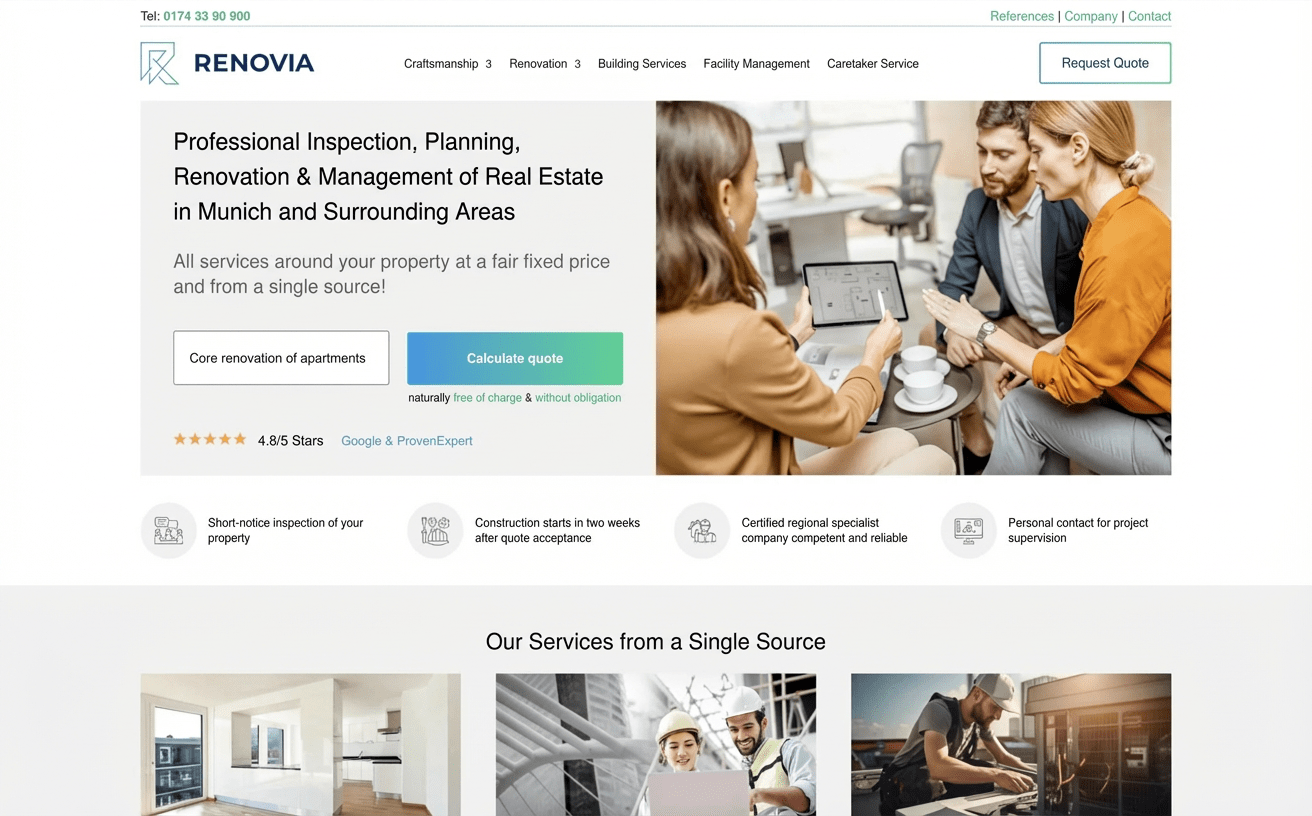
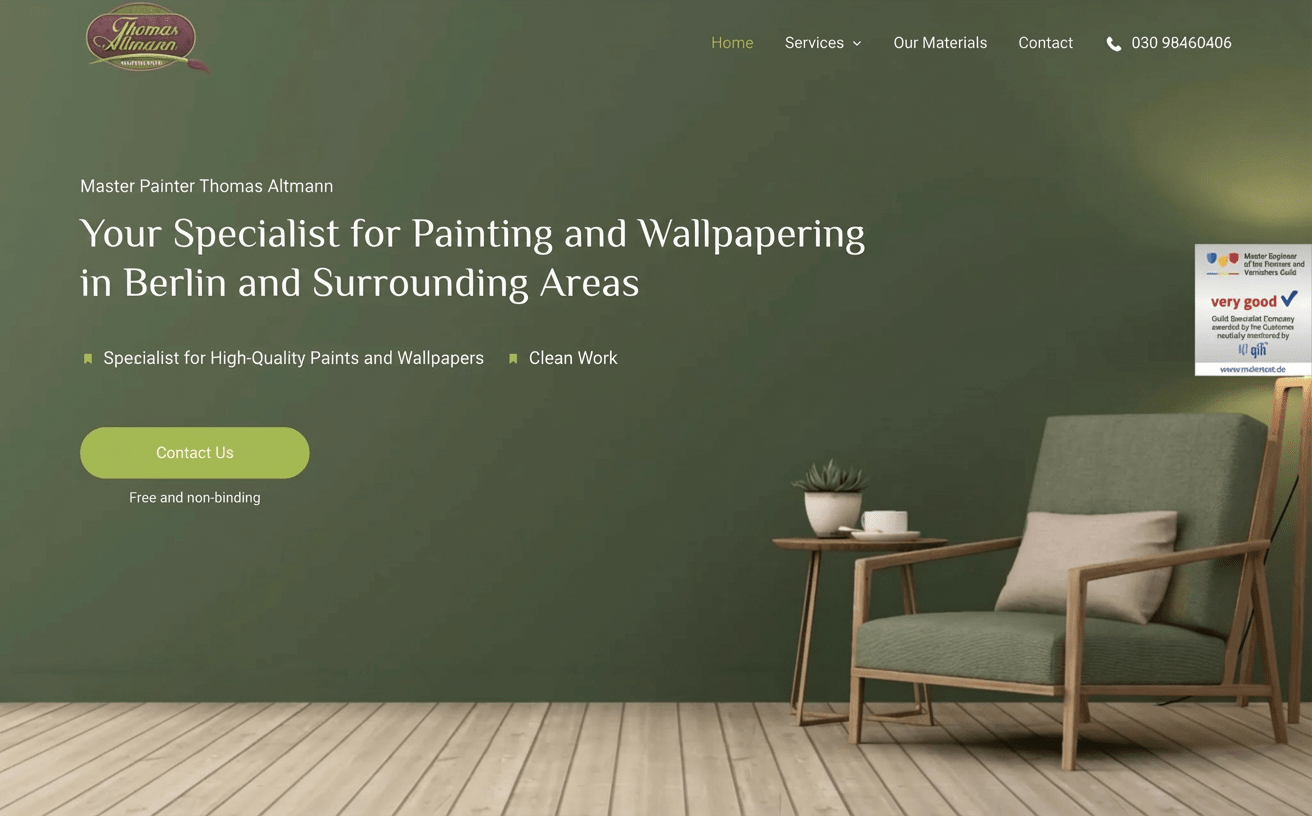
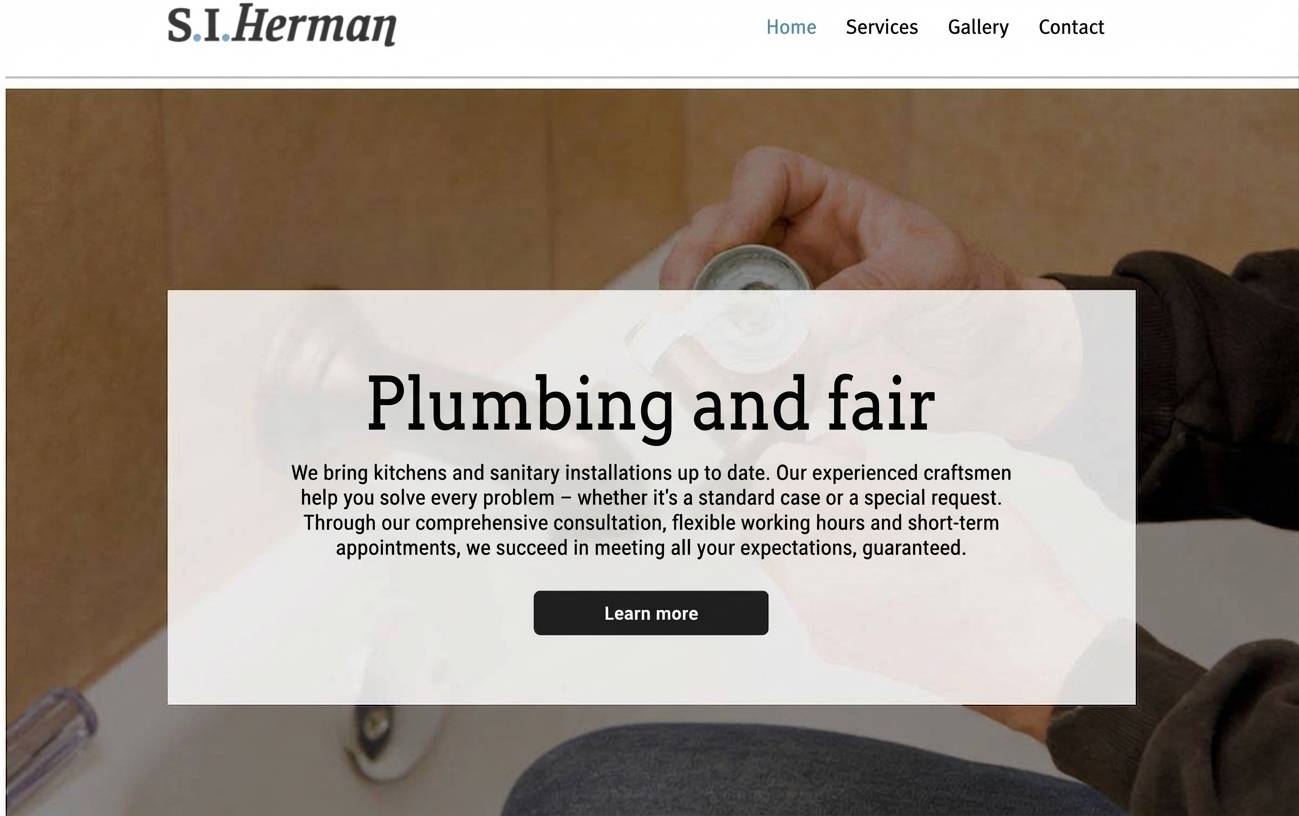
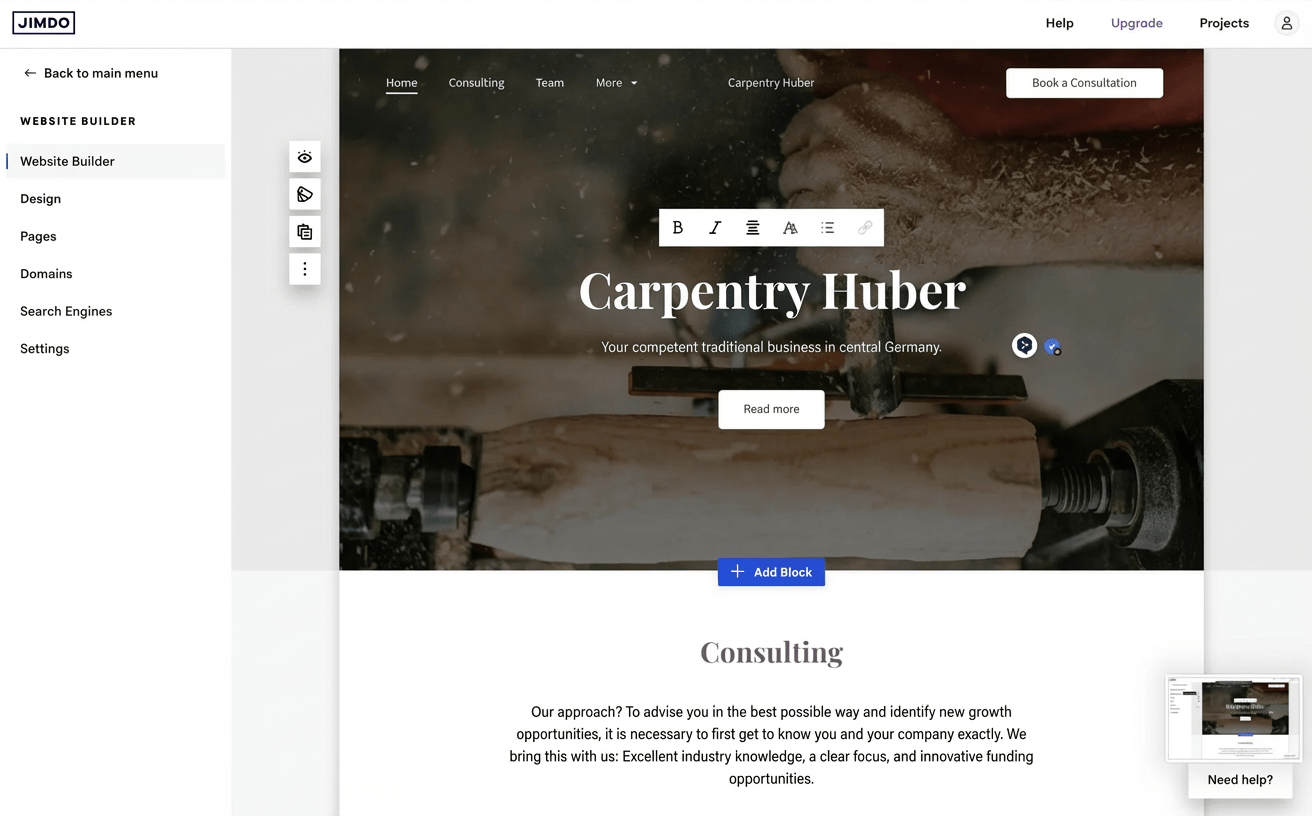
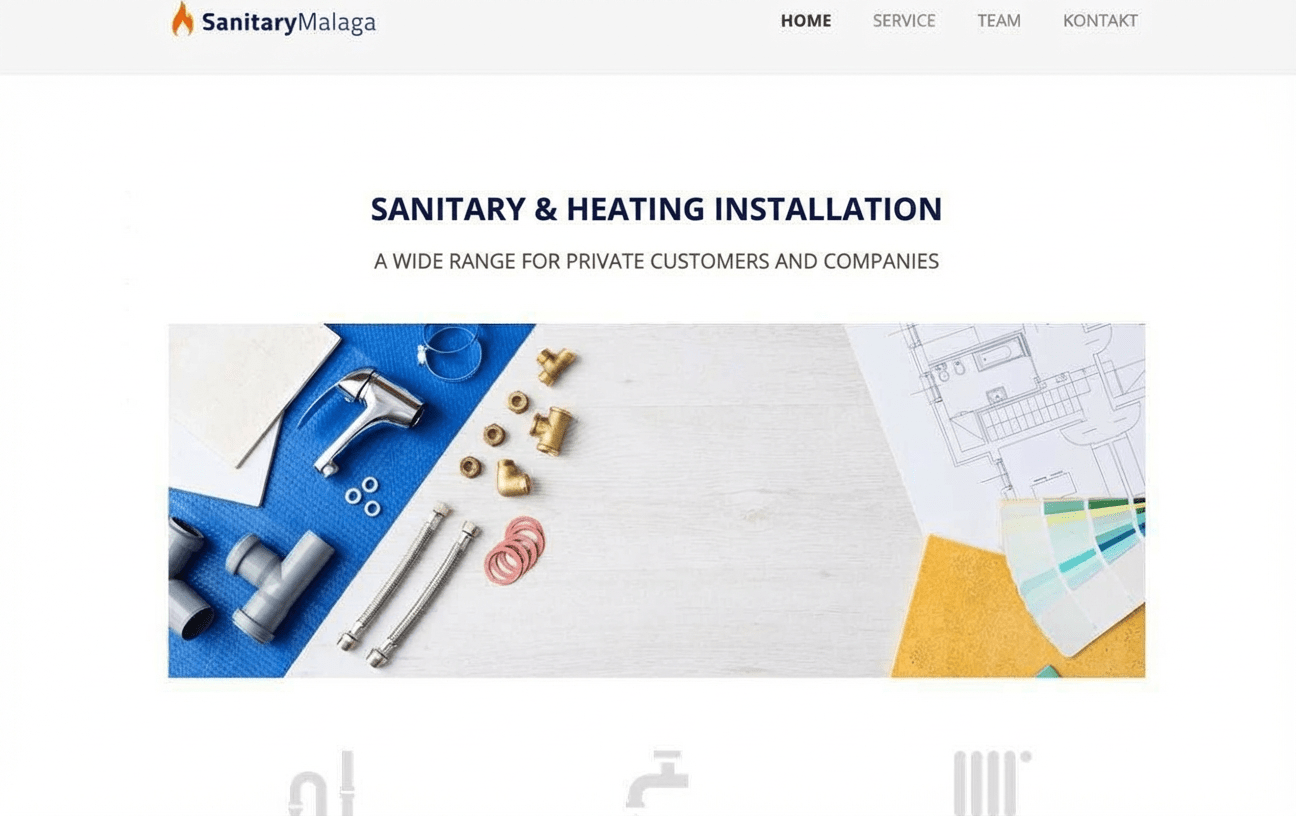
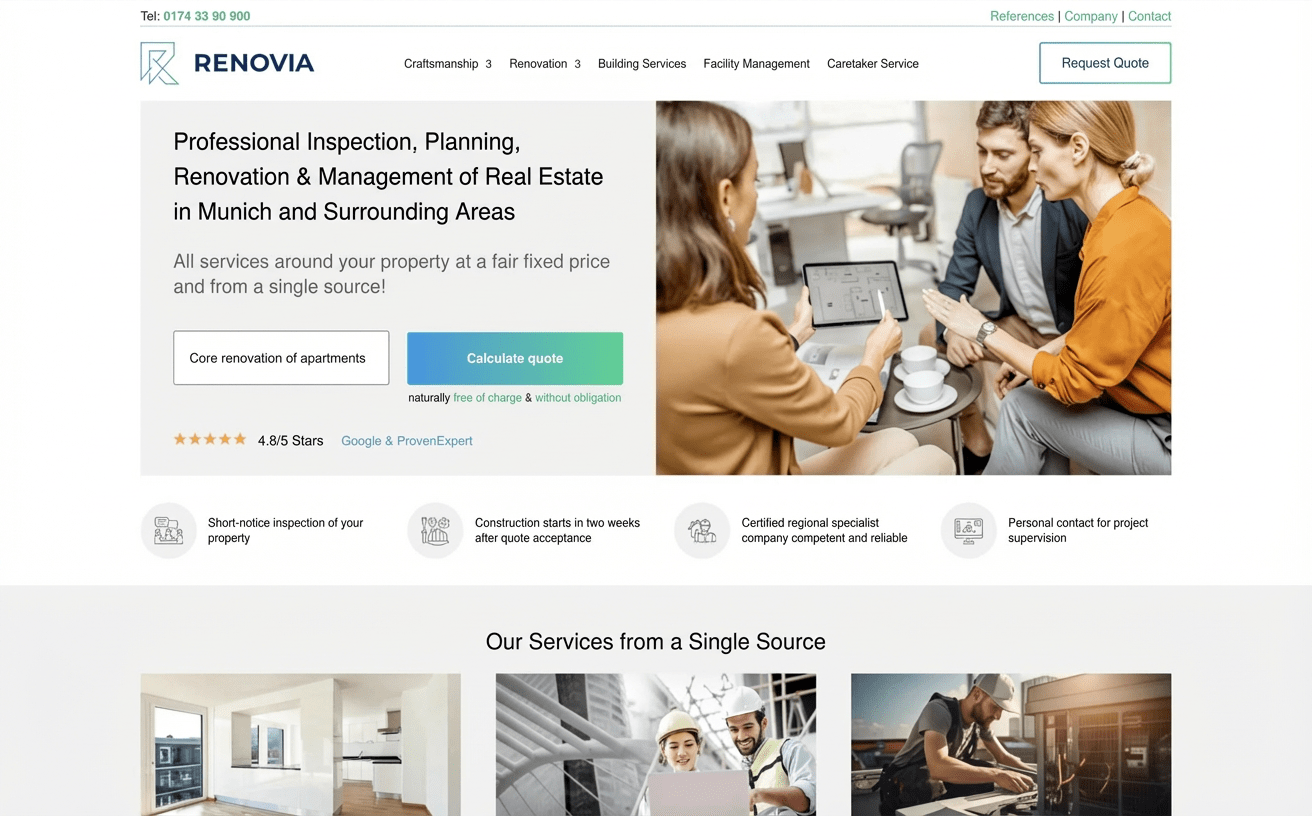
Well-designed tradesman websites
You can use these tradesman websites as inspiration for your own.
I’ve picked out examples of sites that were built by the businesses themselves, as well as websites designed by professional web designers.
Have a look at which content and features you want on your own site — and which style of design fits your business best.

Ways to build a tradesman website
Building a tradesman website yourself isn’t that difficult — and it’s usually much cheaper than hiring a web designer or agency.
That said, both routes come with pros and cons. In this guide, I cover both approaches in detail and share the best tools I’ve tested, along with costs and practical tips.
| Method | Description | Costs |
|---|---|---|
| 1. Build it yourself with a website builder or WordPress | For beginners and simple projects Modern website builders and content management systems let even beginners create a high-quality website directly in the browser. | From around £5 per month |
| 2. Have it built by a web designer or agency | Convenient and professional, but more expensive Tools and service providers vary widely when it comes to support and pricing. A basic website built by a professional typically starts at around £2,000, with no real upper limit. | From around £2,000 |
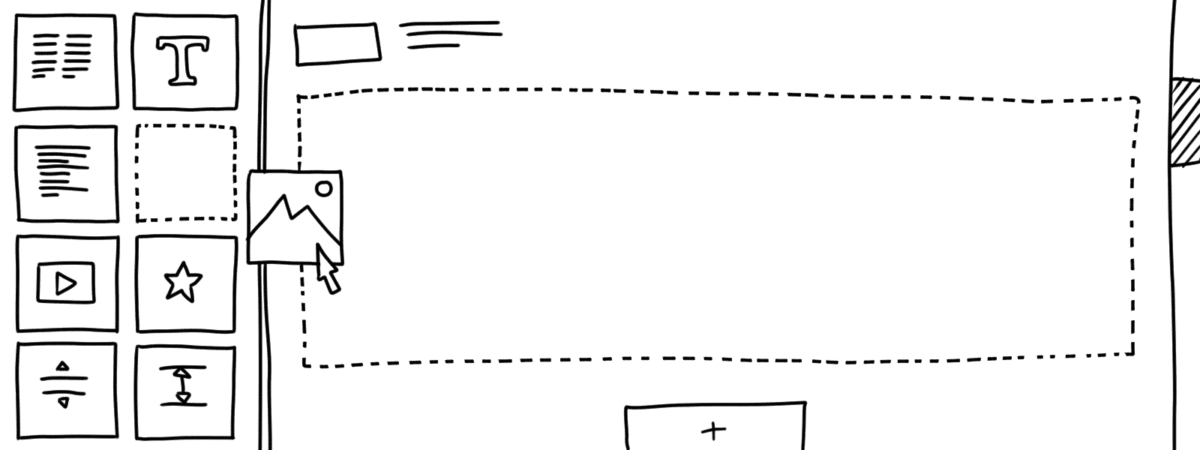
Building a tradesman website yourself isn’t that difficult — and it’s usually much cheaper than hiring a web designer.
However, you should feel reasonably comfortable using a computer and the internet, and be willing to spend some time learning the basics and putting the site together.
Best website builders for tradesmen
-
1 Winner 2026

Test score
9.4
2026
Outstanding
Pros and Cons
- WordPress securely installed with 1 click
- Control over functions and data
- Huge range of extensions and designs
- Automatic updates and backups
- Using WordPress is more complicated than a website builder
Visit sitePricing
- IONOS WordPress
- Fast server hardware
- Incl. domain & email addresses
- From £1 / month
- 30 days money back
-
2 Ideal for beginners

Test score
8.5
2026
Excellent
Pros and Cons
- Very easy to set up
- Best results for simple websites
- AI assistant facilitates creation
- Image database with 17,000 photos
- Email inbox included in the tariff
- Rather not ideal for more complex websites
- Other providers offer more choice in design templates
Visit sitePricing
- IONOS MyWebsite Now
- Free from advertisements
- With your own domain & email
- from 1£ / month
-
3 Best value for money

Test score
7.9
2026
Very good
Pros and Cons
- Very simple and beginner-friendly creation
- Designs optimised for mobile devices
- Free support
- Attractive Pro tariffs
- Selection of design templates is limited
- Functionality not as extensive in comparison (no app store)
Visit sitePricing
- Webador Free
- Permanently free of charge
- No own domain
- Webador banner on the page
- Webador Pro
- Incl. domain and email inbox
- Incl. online shop
- from £8.50 / month
- Test 3 months free of charge
-
4 Very easy to set up

Test score
7.3
2026
Very good
Pros and Cons
- Website wizard that gets your page up and running in just a few minutes
- Attractive & mobile-optimised designs
- Functions rather limited to basics
- Few possibilities for extension
Visit sitePricing
- JIMDO Free
- Permanently free of charge
- Jimdo branding
- No own domain
- JIMDO Premium
- Advertising free
- With your own domain
- from 9,00£ / month
-
5 Most flexible solution

Test score
7
2026
Very good
Pros and Cons
- Website builder with the greatest design freedom
- 800+ high-quality designs, 300+ app extensions
- AI assistant for website and content
- Several image databases integrated
- Range of functions can be overwhelming at first
- Email addresses only via Google Workspace (costs extra)
Visit sitePricing
- WIX Free
- Permanently free of charge
- Wix.com branding
- No own domain
- WIX Premium
- Advertising free
- With your own domain
- from £7.50 / month
- Test 14 days free of charge
-
6 Great design templates

Test score
6.8
2026
Good
Pros and Cons
- Particularly stylish & mobile-optimised design templates
- Templates for every industry
- Integrated marketing and analysis tools
- Access to over 40 million images
- Comparatively few add-ons (or cost extra)
- Email inbox costs extra (via Google Workspace)
Visit sitePricing
- Squarespace Personal
- With your own domain
- from 11,00£ / month
- Test 14 days free of charge
How to build a tradesman website with a website builder
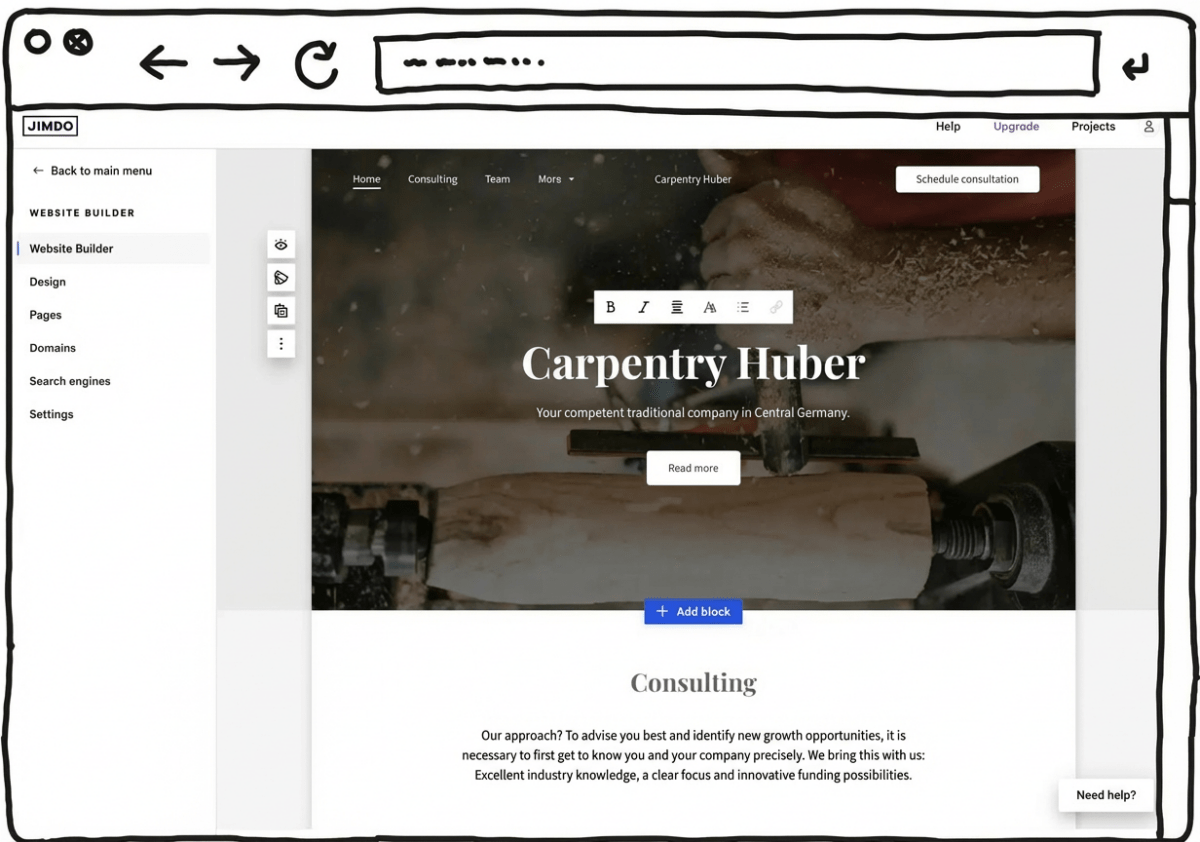
For a standard trade business website, I recommend using a modern website builder.
There are several good reasons for that. The main one: you don’t need any coding skills or to be an IT expert.
Your budget will usually thank you as well, because you don’t need a huge spend for this kind of setup. Even so, the key features you need to build a tradesman website are typically included.
The templates are created by professional designers and can be put together in the browser using drag and drop. All the builder platforms I mention offer templates specifically aimed at trade businesses.
To make your site work well, you mainly need to add your own text and images.
Many builders also include a step-by-step assistant that guides you through setting up your tradesman website the way you want.
And that support often continues after launch, for example when you want to tackle SEO or marketing.
Guide:
- Choose a tool that suits you (you can use my overview as a guide).
- Pick a design template that fits the trades.
- Adjust the design to your needs and the features you want.
- Add your prepared text and images.
- Publish your tradesman website.
Pros and cons of a website builder
- Easy to get started — no coding skills required
- Professionally designed templates can deliver polished results
- No large upfront investment, with affordable monthly plans
- Free plans or trial versions to test things out
- Can be expanded with add-ons such as an online shop or blog
- A support team can help if you run into problems
- Can reach its limits with more complex websites
- Basic plans often come with a limited set of features
- You’re tied to one tool
Conclusion: For simple trade business websites, website builders are a strong choice. They’re designed so that beginners can build professional-looking sites.
All tools include the key layout elements (contact details, portfolio/work examples, services, etc.) as well as templates made for tradesmen. You can also add extras like a blog or an online shop without too much effort.
Top pick (9.4 of 10): WordPress
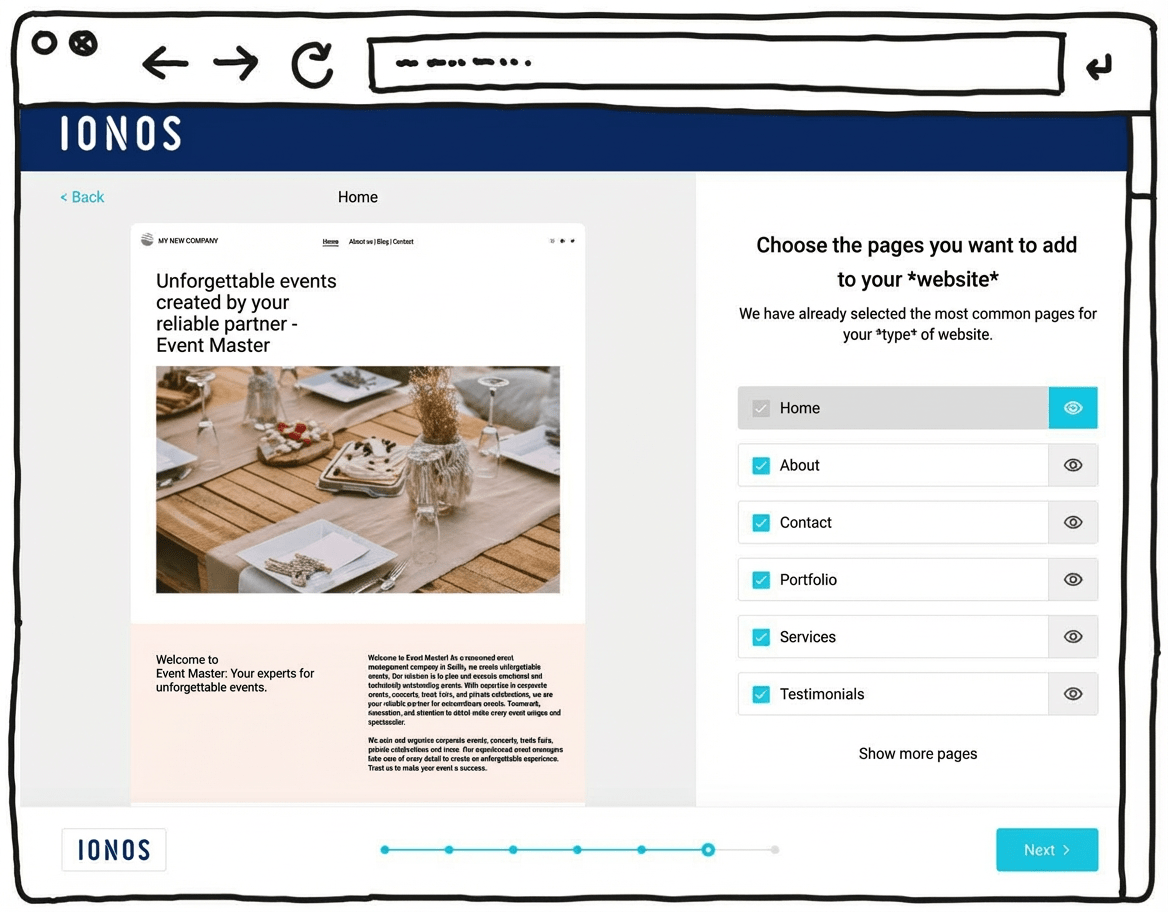
IONOS’s newer WordPress hosting aims to combine the simplicity of a website builder with the advantages of WordPress, the world’s most widely used website system. With its built-in AI setup, it can feel almost as easy as a website builder.
That can make it suitable for beginners who don’t have much experience building websites. The setup assistant guides you step by step through installing WordPress and suggests a practical selection of themes and plugins.
One key difference here is the built-in AI assistant, which can generate an initial WordPress website for you. It helps you take care of the most important settings quickly and find a suitable template. Automatic updates and daily backups can also provide extra peace of mind.
Another plus is customer support, available 24/7, including phone support rather than relying only on chat or email.
Pricing for IONOS WordPress hosting starts at around £1 per month for the first six months, then around £5 per month afterwards. A domain and an email mailbox are included in this price.
Pros of IONOS WordPress hosting
- WordPress installed securely in one click
- AI assistant for building your website
- A professional-looking design within minutes
- Designs well optimised for mobile phones
- All the benefits of WordPress as the world’s most widely used website CMS
- Flexible to extend with plugins
- Blogs or online shops possible
- Switching hosting provider later is possible
Cons of IONOS WordPress hosting
- Less design freedom than drag-and-drop website builders
- The wide range of features can still feel overwhelming for beginners, despite the guided setup
Pricing
- “Start” plan: from £3/month for the first 6 months, then £5/month
- “Grow” plan: from £1/month for the first 6 months, then £10/month
- All plans include your own domain and an email address
Here you can find our detailed IONOS WordPress hosting review.
Whether it’s a neighbour with IT skills, an online freelancer, or a local agency — there are plenty of ways to get a tradesman website made. But how do you tell who will actually do a good job, and what it will cost in the end?
I’ve tested a range of popular tools and web design services — from budget platforms to specialist agencies. I looked closely at the key questions: How good is the design? Is the technical setup solid? And is the value for money fair? You’ll find all results and recommendations in this guide — tailored to tradesmen.
Best web designers for tradesmen
-
1 Winner 2026

Test score
9.1
2026
Outstanding
Pros and Cons
- Custom premium design
- Very good and transparent value for money
- Numerous positive references
- Built with WordPress
- Privacy-compliant implementation
- On-page optimization for Google
- Suitable for complex requirements
- Additional costs may apply for services such as logo design or professional photography.
Get a quotePricing
-
Package pricing
- Landing page (1 page): from 2,990
- Mini (5 pages): from 3,990
- Basic (10 pages): from 4,990
- Premium (15 pages): from 5,990
- VIP (25 pages): from 7,990
- Included services
- Content writing and up to 10 stock photos
- Blog functionality included from the “Mini” package onwards
- Get a 300£ discount
- Mention the discount code “WEBSITEADVISOR300” when making your inquiry.
-
2 Best value for money

Test result
8.5
2026
Excellent
Pros and Cons
- Strong expertise in branding and web design
- Individual consulting and hands-on support
- Very good value for money
- Established provider with more than 300 clients
- A solid selection of well-executed reference projects
- Extensive experience in SEO and Google optimization
- Implementation of online marketing measures such as Google Ads
- Privacy-compliant development
- Additional costs may apply for services related to online marketing.
Get a quotePricing
- Package pricing
- Landing page (1 page): from 1,590
- Mini (5 pages): from 2,990
- Basic (10 pages): from 3,990
- Prices may vary depending on scope and requirements.
- Get a 300£ discount
- Mention the discount code “WEBSITEADVISOR300” when making your inquiry.
-
3 Best subscription model
Test score
8.2
2026
Excellent
Pros and Cons
- Subscription model: no high one-time costs
- Transparent monthly pricing
- Monthly updates included
- Web hosting, domain, and an email inbox included
- Built on WordPress
- May be more expensive in the long term than a one-time build
- Complex requirements are not included
Get a quotePricing
- Service package S
- 3 pages, 1 change per quarter
- £45 per month
- £199 setup fee
- Service package M
- 5 pages, 1 change per month
- £45 per month
- Service package L
- 7 pages, unlimited changes
- £85 per month
- No setup fee
-
4 Top freelancer platform

Test score
7.6
2026
Very good
Pros and Cons
- Best platform for finding freelancers
- International and local freelancers
- Especially cost-effective implementation possible
- Transparent fixed prices
- Security through references, client reviews, and a satisfaction guarantee (for Pro users)
- The large number of freelancers can make selection more difficult.
- Price and quality levels may vary.
Get a quotePricing
- A simple website can be created for just a few hundred Pound.
Before you hire someone, think about this
If you don’t build your tradesman website yourself and instead hire an agency or freelancer, good preparation is key.
The clearer you are about what you want, the smoother the collaboration will be — and the better the end result.
What to consider:
- Who do I want to reach — homeowners, business clients, or both?
- Which services should be clearly visible on my website?
- What should the design feel like — simple, modern, or more traditional and down-to-earth?
A solid starting point is a detailed brief. It helps agencies or freelancers understand what you want and deliver it properly.
Practical tips:
- Create a brief: Write down the essentials — for example your goals, preferred design style, and functions (contact form, photo gallery, maps, etc.). The more specific, the better.
- Plan regular check-ins: Ask to see progress updates and give feedback before everything is finished.
- Gather your materials: Clarify early on what you need to provide — for example text, photos, your logo, or colour preferences.
- Set realistic deadlines: Build in buffer time — things come up, especially when you’re running a trade business.
- Talk openly about budget: Clear agreements on pricing and payment help avoid stress later.
- Get a written quote: A detailed written quote protects both sides from misunderstandings.
Top pick (9.1 of 10): Netfame
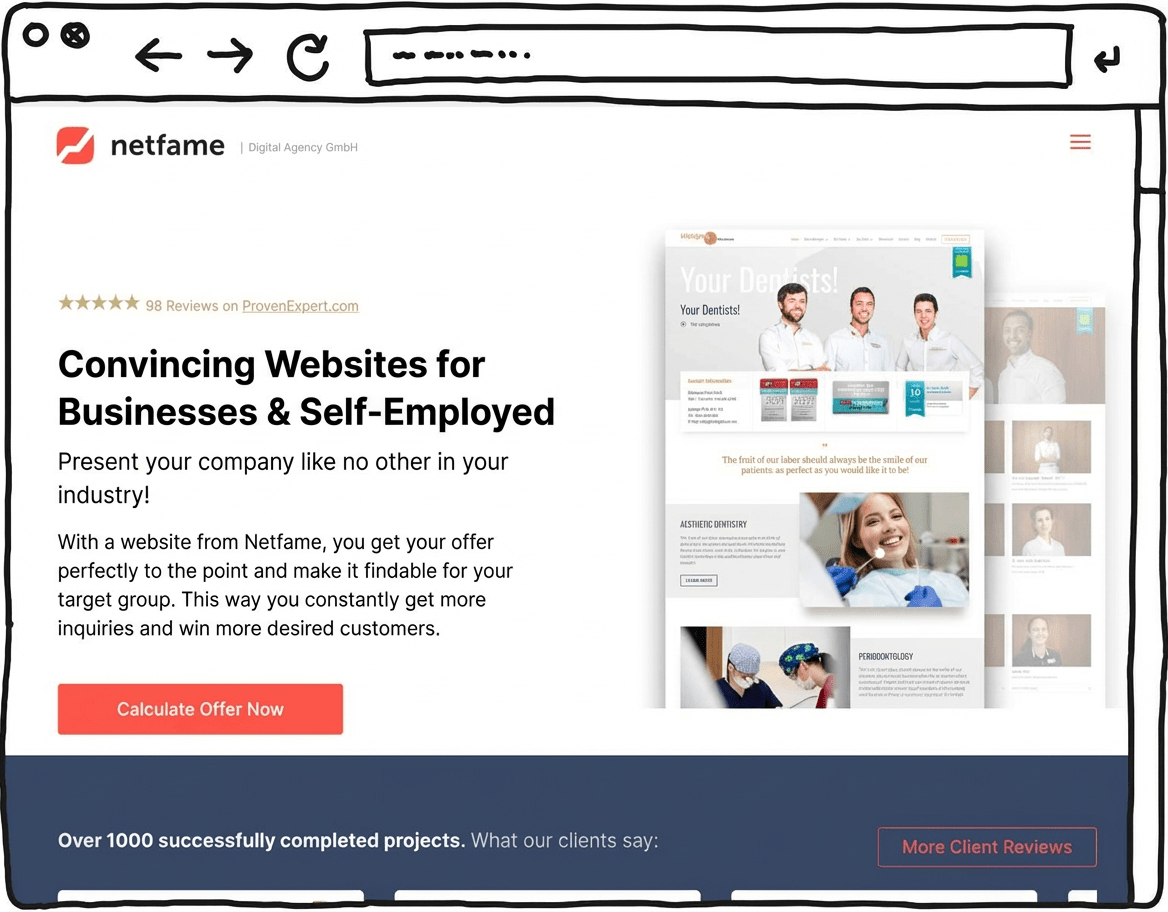
In our comparison, Netfame stood out as a particularly capable option, combining bespoke premium design and WordPress expertise. The agency says it has delivered more than 1,000 websites across a wide range of industries. Transparent pricing was a key factor in its top position.
Many of its projects are showcased in Netfame’s portfolio and come across as modern and cleanly built. Each client receives a bespoke website design.
Another important point is its focus on WordPress as the technical foundation. Using the world’s most widely used website CMS helps keep your website easy to extend over time, and it usually means you can make content changes yourself without much trouble.
Netfame also states that its work meets GDPR / UK GDPR requirements, helping to reduce legal risk for a business website.
On-page SEO optimisation is included in the base package to support search visibility on Google.
Optional add-ons such as logo and brand design, copywriting and professional photography round out the package. Overall, Netfame combines design, build and advice in a full-service WordPress setup.
Strengths of Netfame
- Bespoke premium design
- Many positive references and completed projects
- Transparent pricing
- Professional WordPress implementation
- GDPR / UK GDPR-aligned setup
- On-page optimisation for Google
Weaknesses of Netfame
- Additional costs for services such as logo design or professional photography
Pricing
- Landing page (1 landing page + legal pages and contact) — £2,990
- Mini website (5 pages) — £3,990
- Basic website (10 pages) — £4,990
- Premium website (15 pages) — £5,990
- VIP website (25 pages) — £7,990
Save £300 with Netfame
Mention the discount code “WEBSITEADVISOR300” in your project enquiry and receive a £300 credit.
Website costs depend a lot on what you need and how complex your project is. A simple rule applies: the simpler the site, the cheaper it will be.
For many trade businesses, a straightforward website is enough. You introduce your company, show your services, and make it easy for customers to contact you. You can often build a site like that yourself for just a few pounds per month — for example with a website builder.
Costs go up if you want to add new content regularly, such as recent projects, blog posts or news updates. An online shop — where you sell products or services — will also increase the overall cost.
In the overview below, I’ll show what’s realistic, depending on whether you build the website yourself or hire someone to do it:
Website costs at a glance
Overview: This table gives you a first idea of the minimum costs you’re likely to face:
| Simple website | Medium website | Complex website | Blog | Online shop | |
|---|---|---|---|---|---|
| Suitable for | basic information that doesn’t change often | more extensive or multilingual information | large site with many interactive features | regularly updated, current content | selling goods and services |
| Website builder | from £10/month | from £20/month | not recommended | from £10/month | from £25/month |
| WordPress | from £5/month | from £10/month | from £35/month | from £5/month | from £5/month |
| Web designer | from around £2,000 | from around £3,500 | from around £5,000 | from around £1,500 | from around £3,000 |

Planning the rough structure of your website is the key to building your tradesman site quickly and efficiently.
With a bit of planning, you’ll reach your goal in the most straightforward way.
Follow these steps:
- Your visitors expect certain content and features. Which ones must be included?
- Spread that content and those features across sensible pages such as “Services” or “Contact”.
- Put the logical structure of your tradesman website on paper as a sitemap.
In my detailed guide to website planning, you’ll find plenty of ideas and tips on what visitors typically want to see in different parts of a website.
Create a sitemap
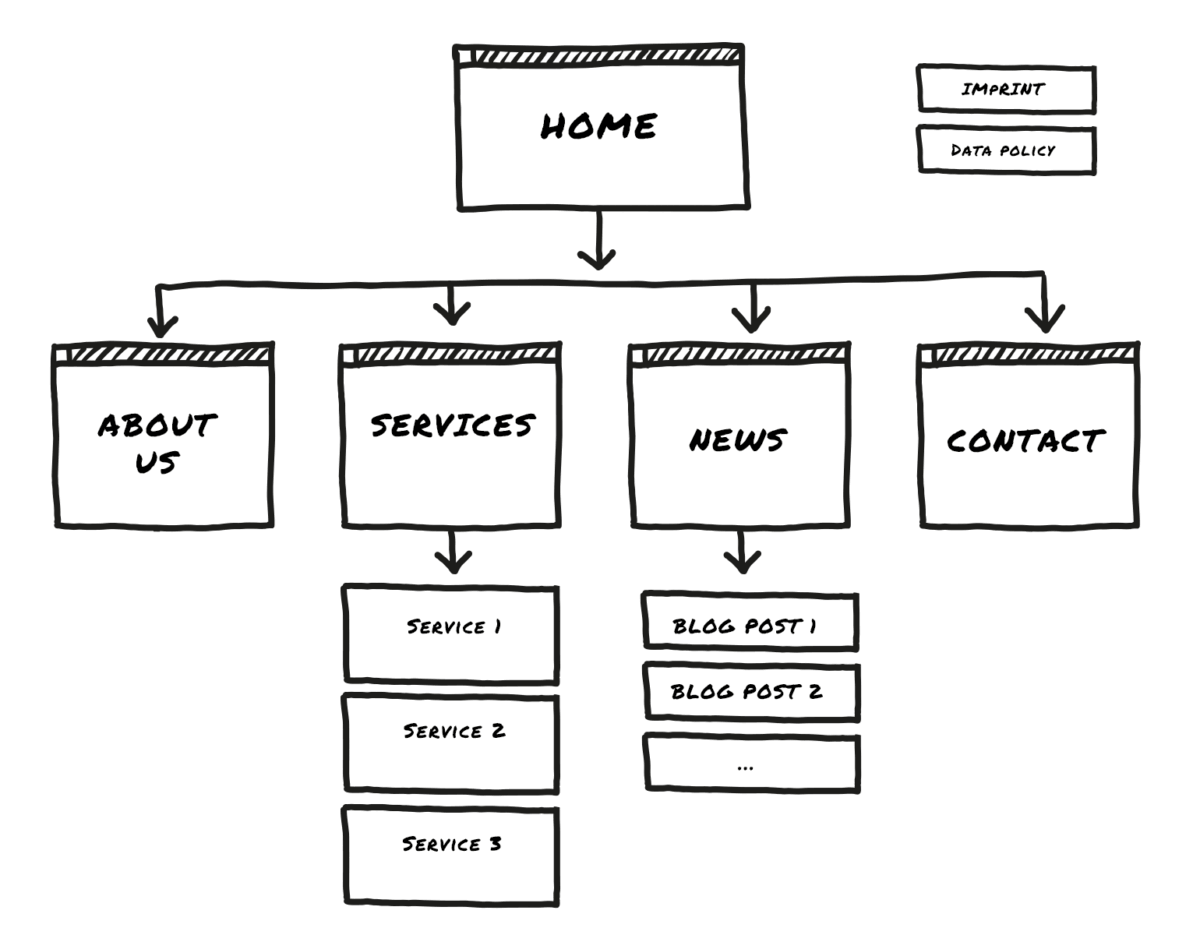
Planning the individual pages for your tradesman website should be as efficient as possible. That’s why I recommend visualising the structure of the site and its subpages in a sitemap.
A sitemap is like a blueprint for your website. You map out which pages you need and how they link to one another. Having a plan like this makes it much easier to build the tradesman website you have in mind with a website builder.
You can jot down your sitemap on paper or create it on your computer. If you want a more polished sitemap to help improve navigation, you can use a tool such as Canva’s sitemap builder.*
- Level 1: Home
- Level 2: Main menu items (“Contact”, “Services”, etc.) — ideally no more than 5 to 7
- Level 3: If you want to split larger topics like “Services” into separate parts, add detail pages here
- Level 4 or deeper: This is only recommended for very complex websites. It’s usually better not to nest pages too deeply.
All the website builders I’ve mentioned let you set up your menu structure. When you build your site, simply transfer the structure you’ve planned.
Plan done? Register your domain name!
As I mentioned earlier, using the free plan from a website builder is usually possible — but it comes with a few limitations.
One of the most important ones: with free versions, you typically only get a subdomain, like this:
myjoinery.wixsite.com
For your trade business website, I’d suggest using your own domain instead. For example:
myjoinery.co.uk
A joinery website looks more professional and easier to trust that way — and the same applies to roofer sites or painter and decorator websites.
You can then also use an email address such as contact@myjoinery.co.uk for customer enquiries.
(If you already own a domain, you can simply skip this step. While building your tradesman website with a website builder, you’ll usually be able to connect your existing domain.)
By the way: I’ve put together a step-by-step guide to registering a domain, including more detailed advice on choosing a good domain name.
Always include legal details and privacy policy
If you run a website in the UK, you need to meet data protection and privacy requirements. In practice, that means publishing clear company information and a privacy notice that explains what personal data you collect, why you collect it, and how people can contact you about it. ICO+2parliament.uk+2
In most cases, you’ll also need clear cookie information and — if you use non-essential cookies (for example for analytics or marketing) — a cookie banner or cookie settings option to collect valid consent. Getting this wrong can lead to complaints and action by regulators. ICO+1
Tip: To get your legal pages right, start with the ICO’s free privacy notice generator (UK GDPR) and make sure your “Company information” is complete.
More legal requirements to know
When you create a website for your trade business, there are a few mandatory details you need to include. Don’t worry — it sounds more complicated than it usually is. Here are the key points at a glance:
| Topic | Applies to | What do you need to do? |
|---|---|---|
| Website owner details (legal notice) | Most non-personal websites | Provide contact details, owner/company information and other required legal details. |
| Privacy notice | Any website | Explain what data you collect and why (e.g. contact form, table booking, embedded maps). |
| Cookies | Websites using cookies/tracking | Use a cookie consent banner to ask for permission if you use non-essential cookies (e.g. analytics or marketing tools). |
| Copyright | Any website | Don’t use other people’s images or text without permission; add credits where required. |
| Data protection officer (DPO) | Certain organisations processing personal data¹ | Check whether you need to appoint a DPO — this can be required for specific types of processing. |
| Cancellation/returns information | Online shops | Inform customers about cancellation and return rights and how to exercise them. |
| Terms & Conditions | Online shops | Set out rules for ordering, payment and delivery (not always mandatory, but usually sensible). |
| Newsletter | If you send marketing emails | Get consent before sending promotional emails (a confirmed opt-in process is a good practice). |
| Online shop requirements | Online shops | Show prices clearly, label the purchase button clearly, and state delivery times. |
¹ Under UK GDPR, whether you need a DPO depends on what you do with personal data (e.g. large-scale processing or sensitive data), not simply the number of employees.
The most exciting moment: your trade business website goes live!
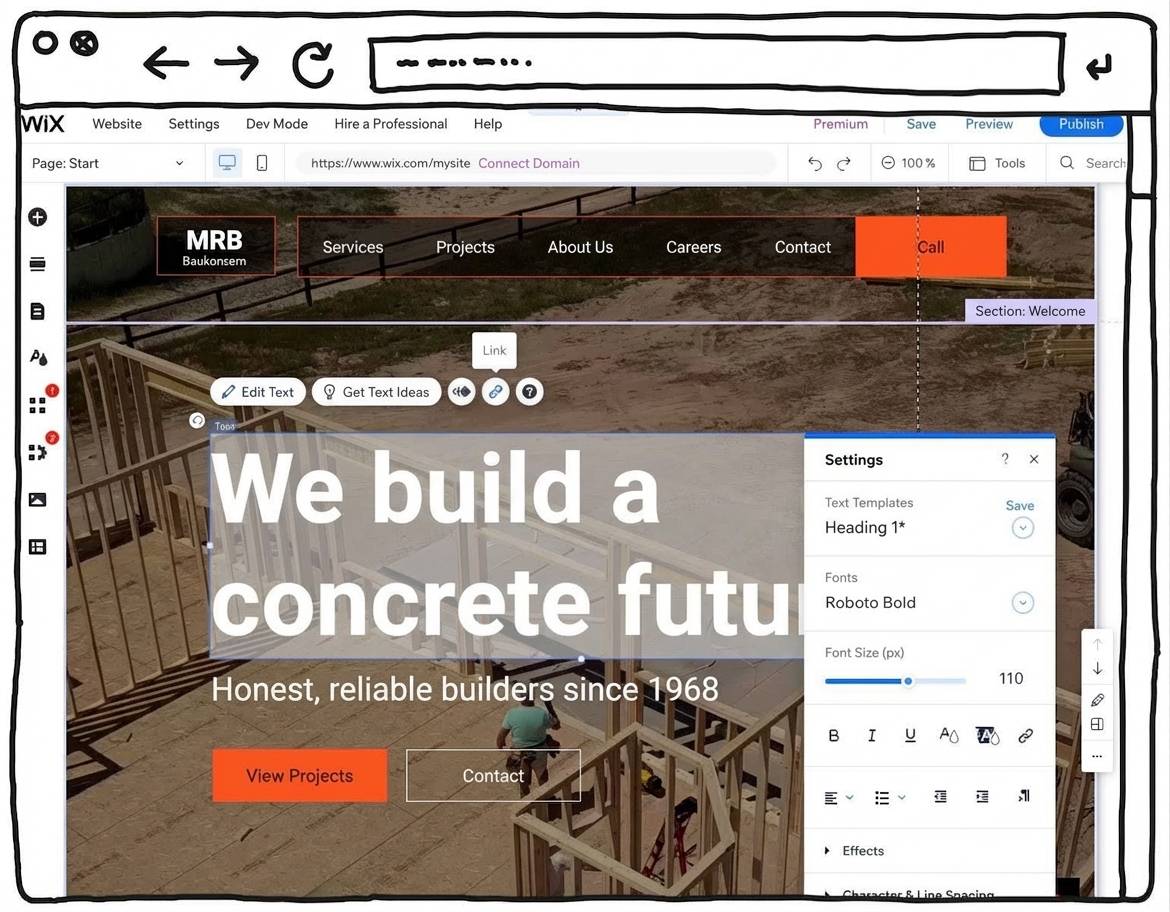
The big moment is almost here: your tradesman website is finished and ready to go live. But before you hit “Publish”, it’s worth doing one final, thorough check.
Try looking at your site through a customer’s eyes: does everything work? Can people find the key information quickly? Does it look right on a mobile?
With tradesman websites in particular, make sure your contact details are visible straight away — people should be able to reach you quickly.
Ask friends, colleagues or family to test whether they can find their way around your site. They’ll often spot small details you might have missed.
Don’t forget: before going live, check the SEO settings in your website builder or CMS. That helps make sure Google can read and display your site properly.
And then it’s time: one click and your trade business is online. Congratulations — you now have your own website you can genuinely be proud of.
Good luck online — and remember: a website is never really “finished”. Keep it up to date, add new projects, and stay visible to customers.
Launch checklist:
- Features: Are all functions on your website active, including interactive elements? Can you click every link?
- Browsers: Does your site display correctly in common browsers (Chrome, Safari, Firefox)? Are you happy with how it looks on mobile?
- Feedback: Ask friends and family to try your website. Can they find their way around easily? Does anything annoy or confuse them?
- Search: Make a final pass through the SEO settings in your website builder. It matters that page titles and preview texts follow best practice and display well in Google.
Do you like your tradesman website design? Feel free to leave a short comment on how you found this guide and what your experience was.
How to create a tradesman website (guide):
To create a tradesman website, you have a few options. A website builder tool such as IONOS, Jimdo or Wix is the easiest choice for beginners, while WordPress offers tradesmen the most flexibility. What matters is choosing a suitable tradesman website template and adding convincing content.
That depends on how you want to create your tradesman website. One-off costs can arise if you pay external specialists to create images and text. Ongoing costs — often starting from just a few pounds per month — usually cover website hosting. If you build your site yourself with a builder like Wix or Jimdo, you typically pay a monthly fee for the plan. Many builder tools also offer free versions, which can be useful for testing features or learning how website creation works.
Hard? Not really — it’s fairly straightforward. Thanks to ready-made templates and setup assistants, beginners can build a website that suits the needs of a trade business. You don’t need coding skills for a standard website. For more complex projects, you can add extra features using plugins and add-ons.
My detailed beginner’s guide to building a website takes you step by step to your own site.
Building and designing a simple tradesman website can be done in a day if you use a website builder. You can save a lot of time if you have your photos and text ready in advance. A sitemap that outlines the site structure helps you choose and adapt the right template — and makes creating an electrician or roofer website much easier.
7 tips for building a good tradesman website:
-
Decide what features your website should include
-
Choose a tool that suits this type of website
-
Use a sitemap to plan the page structure
-
Pick a design style that fits your business
-
Mobile-friendly design and fast loading times are essential
-
Keep your text short and clear
-
Use photos that are meaningful and authentic
You might also like
- Create a website in 2026: 5 simple steps Read article
- Build a budget website: cheapest tools & step-by-step guide (2026) Read article
- Create a coaching website: top tools, costs & tips (2026) Read article
- Create a hotel website: top tools, costs & tips (2026) Read article
- Create a photography website: top tools, costs & tips (2026) Read article
- Create a portfolio website: top tools, costs & tips (2026) Read article
- Create a website for doctors: top tools, costs & tips (2026) Read article
- Create a rental website: top tools, costs & tips (2026) Read article
- Create a restaurant website: top tools, costs & tips (2026) Read article
- Create a school website: top tools, costs & tips (2026) Read article
- Tradesman website: top tools, costs & tips (2026) Read article
- Create a wedding website: top tools, costs & tips (2026) Read article
Comments and ratings
Was this article helpful?
Rate article
Share article