Online shop tools comparison 2026

As seen in:



Top 3 test winners for online shop tools:
-
Visit site
Test score
9.1
2026
Outstanding
-
Visit site
Test score
7.9
2026
Very good
-
Visit site
Test score
7.9
2026
Very good

This online store tools comparison 2026 covers:
There are different types of online shop tools, each suited to different needs and users. Based on my own experience and extensive testing, I’ll give you an overview of the main types of online shop tools and who they tend to work best for.
Types of online store tools
There are several categories of online shop tools, each designed for different user groups.
- Shop builders such as Shopify and IONOS are ideal for beginners and small to medium-sized businesses that want a quick, straightforward solution. They typically offer simple setup, hosting included, and customer support, but come with monthly fees and are generally less flexible than self-hosted options.
- Self-hosted online shop tools such as WooCommerce are aimed at more experienced users and developers who need greater control and flexibility. These options can be highly customisable and don’t usually charge licence fees, but they require technical know-how and you’ll need to manage hosting and security yourself.
- Enterprise ecommerce tools such as Shopware, Magento Commerce and Salesforce Commerce are designed for larger businesses with high requirements around scalability and customisation. They offer a wide range of features, strong scalability and professional support, but they can be expensive and often involve a complex setup, plus significant technical resources.
Which online store tool is right for you?
Overall, the best online shop tool for you depends on your requirements and your level of technical confidence. Each option has its own strengths and trade-offs, so it’s worth weighing them up carefully.
| Shop builders | Self-hosted shop | Enterprise system | |
|---|---|---|---|
| Well-known tools | Shopify, IONOS Shop | WooCommerce | Shopware, Magento Commerce, Salesforce |
| Suitable for | Beginners, small to medium-sized businesses | Advanced users, developers | Large companies |
| Advantages | Easy setup, hosting included | High flexibility, no licence fees | High scalability, extensive features |
| Disadvantages | Monthly fees, limited flexibility | Requires technical knowledge, self-management | High costs, complex implementation |
Alternatives to online shop tools:
Even with beginner-friendly options such as shop builders, setting up your own online shop still involves some effort. Possible alternatives to running your own shop include:
- Marketplaces such as Amazon, eBay and Etsy let you sell products without having your own website. These platforms offer strong reach and often include built-in payment and shipping options.
- Social media shops such as Facebook Shops or Instagram Shopping are another option. They allow you to sell directly via social networks and make use of an existing follower base. However, you are still dependent on the platform and its rules.
- Dropshipping services such as Oberlo allow you to sell products without holding stock, as orders are shipped directly from the supplier to the customer. This can reduce risk and storage costs, but margins may be lower.
Conclusion: With all of these alternatives, you rely heavily on the platform and may have to accept comparatively high fees. You also compete directly with many other sellers, and you have less creative freedom to shape your shop around your brand and your needs. Owning your shop can give you more control over customer relationships and long-term profitability.
“I’ve found that, in the long run, you’re often better off with your own online shop when it comes to customer loyalty and profitability. The best online shop tools also offer integrations with platforms like Amazon or Instagram, so you can manage multiple sales channels.”
Johannes Schwaderer
-
1 Winner 2026

Test score
9.1
2026
Outstanding
Pros and Cons
-
Comprehensive online shop for all industries
-
High-quality shop designs
-
Quick setup
-
Highly flexible and expandable
-
Convenient order processing
- Extensions often come at an additional cost
Visit sitePricing
- Shopify Basic
- Unlimited products
- Online shop and additional sales channels
- Secure payments
- From £27 per month
- 14-day free trial
-
-
2 Best value for money

Test score
7.9
2026
Very good
Pros and Cons
-
WooCommerce securely installed in one click
-
Full control over features and data
-
Extensive range of extensions and design themes
-
Automatic updates and backups
- Using WooCommerce is more complex than website builder systems
Visit sitePricing
- IONOS WooCommerce
- Pre-installed WooCommerce plugin
- Automatic updates and backups
- High-performance server hardware
- Includes domain and email inbox
- From £1 per month
- 30-day money-back guarantee
-
-
3 Very easy to set up

Test score
7.9
2026
Very good
Pros and Cons
- Convenient setup
- Google Shopping and Facebook Ads
- Build it yourself or work with a designer
- Less suitable for larger online shops
- Other tools offer a wider range of shop designs
Visit sitePricing
- IONOS Shop Plus
- Up to 5,000 products
- With a dedicated personal advisor
- Includes domain and email inbox
- From £1 per month
-
4 For simple online shops

Test score
8.5
2026
Excellent
Pros and Cons
-
Very easy and beginner-friendly setup
-
Mobile-optimised designs
-
Affordable Pro plans
- Limited selection of design templates
- Features not as comprehensive in comparison (no app store)
Visit sitePricing
- Webador Free
- Permanently free
- No custom domain
- Webador banner displayed on the site
- Webador Pro
- Includes domain and email inbox
- Includes online shop
- From £4.50 / month
- 6-month free trial
-
-
5 Flexible shop builder

Test score
6,6
2026
Good
Pros and Cons
- Only online shop with AI setup
- Wide selection of high-quality designs
- Very flexible customisation
- Clear, user-friendly shop dashboard
- Reaches its limits with larger online shops
Visit sitePricing
- WIX Core
- From £26.80 / month
- For physical and digital products
- Up to 50,000 products in the shop
Online store tools I tested
Alongside our test winners, we also took a close look at other well-known and less well-known online shop tools. Here you’ll find a complete overview of all the web shop tools we reviewed:
| Rank | Tool | Score | Short description | Tool link |
|---|---|---|---|---|
| 1 | Shopify | 9.1 of 10 | Best online shop tool 2026 | Visit tool |
| 2 | WooCommerce by IONOS | 8.5 of 10 | Best value for money | Visit tool |
| 3 | IONOS Shop | 7.9 of 10 | Easiest shop setup | Visit tool |
| 4 | Webador Shop | 7 of 10 | For simple online shops | Visit tool |
| 5 | WIX eCommerce | 6.6 of 10 | Flexible shop builder | Visit tool |
| 6 | Squarespace Shop | 6.4 of 10 | High-quality shop designs | Visit tool |
| 7 | Jimdo Shop | 6.2 of 10 | Easy setup | Visit tool |
| 8 | Weebly | 5.6 of 10 | Free online shop option | Visit tool |
| 9 | Shopware | 5.2 of 10 | Enterprise ecommerce system | Visit tool |
The different online shop tools naturally have some things in common, but there are also clear differences.
To make them objectively comparable, we apply the same detailed set of test criteria to every online shop tool. This helps you compare the options properly when you’re choosing a tool to build your own online shop.
Our aim is to assess the tools and their plans as objectively and thoroughly as possible.
Unlike many other comparisons of online shop tools, our ratings are not based on the commission we receive from tools. The tool we name as the best overall really is the strongest performer — based on our transparent test results.
To do this, we score each online shop tool across several categories and apply weightings, so we can calculate an overall score for each tool.
Evaluation criteria
| Evaluation criteria | Category winner | |
|---|---|---|
| Beginner-friendly setup (Weighting: 20%) |
| IONOS |
| Shop design (Weighting: 15%) |
| Shopify |
| Features and scalability (Weighting: 25%) |
| Shopify |
| Marketing and SEO (Weighting: 10%) |
| Shopify |
| Support and reviews (Weighting: 10%) |
| WooCommerce by IONOS |
| Costs and value for money (Weighting: 20%) |
| WooCommerce by IONOS |
Rank 1: Shopify (9.1 of 10)
Shopify was clearly the strongest online shop tool I tested and finished top of the ranking with a very good overall rating. Its ease of use and wide range of features make it appealing for beginners, but also suitable for growing shops and more experienced online retailers.

Pros of Shopify
One of Shopify’s biggest strengths is how easy it is to get started. You can set up an online shop in just a few steps, even without technical experience. The platform offers a large selection of professionally designed templates that can be customised with little effort. In my test, I was able to set up a complete shop — including product listings and basic design adjustments — in less than a day. Shopify also offers a wide range of apps that can help improve marketing, sales, and day-to-day operations.
Another strong point is customer support. Shopify offers 24/7 assistance via live chat, phone, and email, which is especially useful if you need help quickly. During my testing, I contacted support several times and consistently received fast and knowledgeable responses. Security standards are also high, helping to protect both your data and your customers’ information.
Cons of Shopify
There are some downsides to consider. Monthly fees can add up over time, particularly if you rely on multiple paid apps. Shopify also charges transaction fees if you don’t use its own payment solution, Shopify Payments. Depending on your plan, these fees typically range from around 0.5% to 2% per transaction.
Pricing
Shopify’s pricing depends on the plan you choose and any additional apps you use. Entry-level plans start at around £25 per month and cover the basics needed for a simple online shop. Higher-tier plans, priced at roughly £75 per month, include advanced features such as detailed reporting and gift cards.
Conclusion
Overall, Shopify impressed me with its ease of use, reliable support, and broad feature set. If you’re looking for a powerful yet accessible online shop tool, Shopify is a solid and well-rounded option.
Rank 2: WooCommerce by IONOS (8.5 of 10)
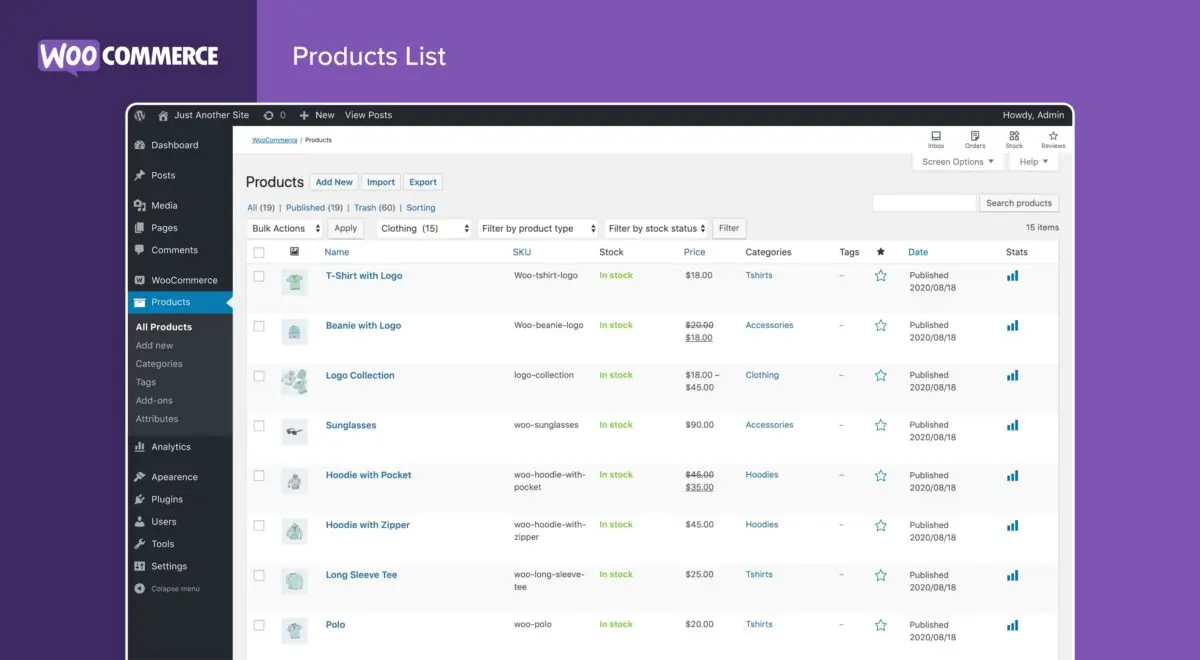
WooCommerce by IONOS takes second place in my test with a very good overall rating. What stands out in particular is the flexibility of WooCommerce combined with hosting that makes setup and installation much easier. While WooCommerce, as an open-source solution based on the well-known WordPress CMS, offers a wide range of customisation options, it does require a bit more technical knowledge and effort than some other platforms — something that is largely balanced out by IONOS’s setup assistant and support.
Pros of WooCommerce with IONOS
For me, the biggest strength of WooCommerce by IONOS is its flexibility. The system is fully integrated into WordPress and can be adapted very precisely to your individual needs. If you already have experience with WordPress, setting up WooCommerce is generally straightforward.
Another key advantage is that you’re not tied to a single provider. Unlike closed platforms such as Shopify, WooCommerce is open source and remains fully under your control. You’re free to choose your hosting provider and are not locked into the infrastructure of one specific company.
In practical terms, this means that even if you start out using IONOS’s convenient hosting and setup, you can move your shop to a different provider at any time.
WooCommerce is also highly extendable. Thanks to a large selection of plugins and themes, you can tailor your shop to your exact requirements. From additional payment options to SEO enhancements, almost everything can be added as needed.
Cons of WooCommerce
That said, WooCommerce does require a higher level of technical confidence. Installing and configuring extensions or troubleshooting issues can take more time than with fully managed platforms like Shopify.
Security updates and hosting maintenance also need ongoing attention, which may be challenging for less experienced users.
Pricing
IONOS offers a well-equipped WooCommerce hosting package for around £18 per month, which is relatively affordable compared to many other shop solutions. This price typically includes your own domain, email inboxes, and useful extras such as automatic backups and security scans.
Conclusion
Overall, I found the combination of WooCommerce and IONOS to be a very solid option if you’re willing to invest some time in technical upkeep. The level of flexibility is excellent, and for anyone looking to build a scalable and independent online shop, this setup offers a strong foundation.
Rank 3: IONOS Shop (7.9 of 10)
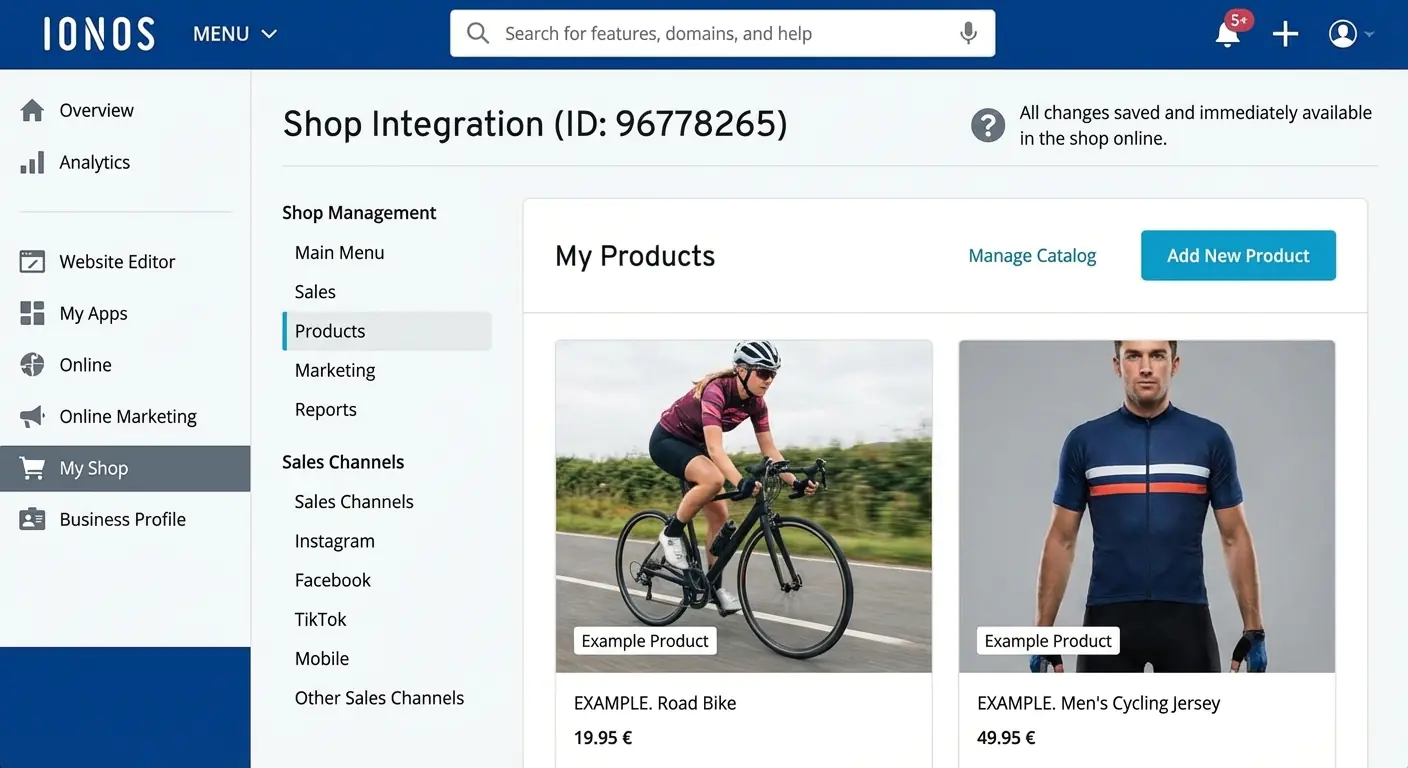
IONOS Shop comes third in my test with a good overall rating. The tool provides a solid base for building an online shop and stands out for its value for money and a broad set of features.
Pros of IONOS
A major advantage of IONOS Shop is its ease of use. Setting up the shop is straightforward and easy to understand, even for beginners. During my test, I was able to get a shop up and running quickly and add products without any issues. IONOS offers a range of templates you can customise, which helps you create a shop that looks polished and professional.
Another plus is reliability and support. IONOS offers 24/7 customer support to help with questions and problems. Security standards are also strong, including SSL certificates and regular backups, which helps protect your data.
Cons of IONOS
One downside is that IONOS Shop is less flexible than tools such as Shopify or WooCommerce. Customisation options are more limited, and some advanced features are only available on higher-priced plans.
Pricing
IONOS Shop is competitively priced. Entry-level plans start at around £20 per month and include the core features you need to get started. There are also promotional offers for the first six months at a much lower monthly rate. Plans with more advanced features are available at higher prices, starting at roughly £27 per month.
Conclusion
Overall, IONOS Shop is a good choice for beginners and small businesses that want a reliable and affordable online shop tool. Its simple setup and helpful support make it especially appealing if you’re new to ecommerce.
Depending on the business model you plan to use for your online shop, a different tool may be the best fit. The overview below is designed to help you find the most suitable online shop tool for your specific use case.
| Purpose of use | Specific requirements | Best choice |
|---|---|---|
| Selling physical products | Simple product management, inventory tracking | Shopify |
| Selling digital products | Download management, licence handling | Shopify |
| Dropshipping | Supplier integration, automated order processing | Shopify |
| Selling subscriptions | Recurring payments, subscription management | Shopify |
| Selling at the point of sale (POS) | POS integration, hardware support | Shopify |
| Shop with a large product catalogue | Scalability, performance, import tools and catalogue interfaces | Shopify |
| Online shop for small businesses | Cost control, ease of use | WooCommerce |
| Website with integrated shop | Strong shop builder, seamless integration | WooCommerce |
| Creating a free online shop | No upfront costs, basic features | WooCommerce |
Conclusion
An online shop tool is the best option if you’re looking to run a professional online shop with a broad range of features and straightforward management, without needing deep technical knowledge.
Best online shop tools compared:
- Shopify (9.1 of 10)
- WooCommerce by IONOS (8.5 of 10)
- IONOS Shop (7.9 of 10)
- Webador Shop (7 of 10)
- WIX eCommerce (6.6 of 10)
- Squarespace Shop (6.4 of 10)
- Jimdo Shop (6.2 of 10)
- Weebly (5.6 of 10)
- Shopware (5.2 of 10)
An online shop tool is software that helps you create and manage an online shop. It allows you to list products, process orders, and handle payments.
Some of the best-known online shop tools include Shopify, Wix eCommerce, and WooCommerce. These tools are widely used for their ease of use, flexibility, and broad range of features.
Costs vary depending on the tool and the plan you choose. Basic options often start at around £10 per month, while more advanced, professional solutions can cost £30 or more. Some tools also offer free entry-level plans with limited features.
There are many different online shop tools available — estimates suggest there are more than 200. They range from simple shop builders for beginners to complex, self-hosted solutions designed for large businesses.
Hosted online shop tools are managed and maintained by the provider, as with Shopify. Self-hosted tools, such as WooCommerce, require you to take care of hosting, updates, and maintenance yourself.
The most popular online shop tools include Shopify, Wix eCommerce, and WooCommerce. These tools are widely adopted and offer features that make running an online shop easier.
To sell across multiple platforms, you can use integration tools such as ChannelAdvisor or Sellbrite. These help you manage stock levels and orders centrally, even when selling through different channels.
Look for online shop tools that offer solid SEO features, such as Shopify or WooCommerce. Key factors include clean URLs, meta tag control, fast loading times, and mobile optimisation.
For retailers, tools like Shopify, BigCommerce, and Magento are often well suited. They offer extensive features, strong scalability, and integrations with a wide range of sales and marketing tools.
Online shop tools provide everything you need to sell products online. You can add products, manage orders, process payments, and handle customer data — all through a central dashboard.
Comments and ratings
Was this article helpful?
Rate article
Share article